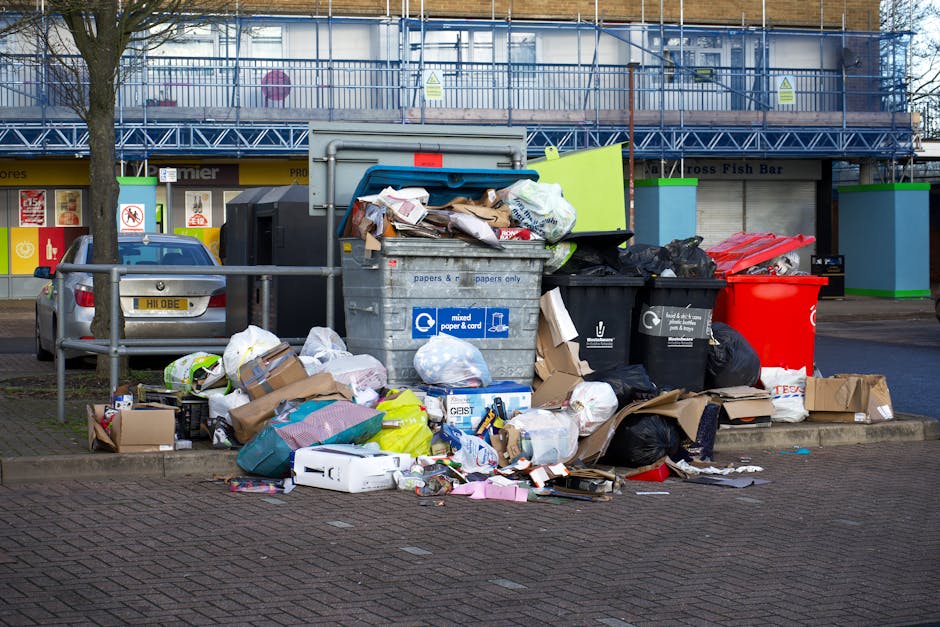
Avoid hidden rubbish removal charges in Hanwell what to know
If you have ever been quoted a "quick price" for rubbish removal and then watched the number creep up on the day, you are not alone. Hidden charges can turn a simple clear-out into an annoying, expensive job, especially when you are dealing with bulky items, awkward access, or mixed waste. This guide on Avoid hidden rubbish removal charges in Hanwell what to know explains how pricing usually works, where surprise fees come from, and what to check before you agree to anything.
Whether you are clearing a garden, a garage, a flat, or a full house, a little preparation can save real money. Truth be told, most problems happen when people are rushed, vague on the details, or too polite to ask the awkward questions. Let's fix that.
Contents
- Why avoiding hidden rubbish removal charges matters
- How rubbish removal pricing usually works
- Key benefits of checking costs properly
- Who this is for and when it makes sense
- Step-by-step guidance
- Expert tips for better results
- Common mistakes to avoid
- Tools, resources and recommendations
- Law, compliance, standards and best practice
- Options, methods and comparison table
- Case study or real-world example
- Practical checklist
- Conclusion
- Frequently asked questions
Why avoiding hidden rubbish removal charges matters
Hidden charges are more than a budgeting nuisance. They can make it harder to compare providers fairly, cause delays on the day, and leave you feeling like you have been cornered into paying more than expected. In a busy area like Hanwell, where people often need quick collections around work, school runs, or weekend house moves, that kind of friction is the last thing anyone needs.
In practical terms, the biggest issue is uncertainty. A quote might look low at first glance, but once loading time, congestion, extra labour, heavy waste, stairs, parking issues, or "special disposal" costs are added, the final bill can jump. And if you are clearing a property under time pressure, you may feel you have no choice but to accept it. Not ideal.
That is why checking the full scope before booking matters so much. It helps you compare apples with apples, protect your budget, and choose a service that feels transparent rather than slippery. If you want to see how a provider presents service information and trust signals, it can help to review their about us page and their pricing and quotes information before you even make contact.
Expert summary: The cheapest rubbish removal quote is not always the cheapest job. A clear, itemised price is usually better than a vague estimate that can be stretched on arrival.
How rubbish removal pricing usually works
Most rubbish removal services price work based on a mix of volume, weight, labour, access, and disposal complexity. That sounds fairly straightforward, but the detail matters. A small pile of light waste is one thing; a sofa upstairs in a tight terrace with no easy parking is another. The same van, the same hour, very different effort.
In many cases, pricing starts with a quote based on what you describe. The provider may ask for photos, a list of items, approximate quantity, and details about access. If the job is more complicated than first explained, the price may change. That change is not automatically unfair, but it should be explained clearly and agreed before work begins.
Common pricing elements include:
- Volume: how much space the waste takes in the vehicle.
- Weight: especially relevant for rubble, soil, tiles, and mixed builders waste.
- Labour: whether the team carries items from upstairs, a loft, a cellar, or a garden at the back.
- Access: stairs, narrow hallways, no lift, long carry distances, or restricted parking.
- Waste type: some materials are more expensive to process than general household rubbish.
- Timing: urgent or out-of-hours requests may cost more, depending on the provider.
If you are comparing services for a larger clear-out, it can help to look at specific service pages such as house clearance, garden clearance, or office clearance to understand how the work is usually packaged.
Where hidden charges usually appear
Most unpleasant surprises come from one of a few predictable places. The quote sounded neat, but it did not include:
- stairs or loft access
- extra labour for lifting heavy items
- parking or waiting delays
- extra waste after the van is already loaded
- different disposal treatment for certain materials
- furniture that needs dismantling
- builders waste mixed with general junk
To be fair, not every extra cost is a hidden charge. If you ask for a loft cleared and forget to mention there is no lift and the loft ladder is broken, that change is a real operational issue. The key difference is transparency. A proper provider explains what is included and what is not, before the team turns up at your door.
Key benefits and practical advantages
When you avoid hidden rubbish removal charges, you do more than save money. You also make the whole process calmer and quicker. That sounds obvious, but in a real household or business clear-out, calm is worth a lot.
- More accurate budgeting: you know what the job will cost before it starts.
- Better comparison: it becomes easier to judge different providers on the same basis.
- Less stress on collection day: no awkward renegotiation at the gate.
- Faster decision-making: when the quote is clear, you can book sooner.
- Better trust: transparent pricing usually reflects a more professional service.
- Cleaner scope: you know exactly what items are included and what needs separate handling.
There is also a small but important psychological benefit. Once the price is clear, the job feels manageable. A tidy quote, a confirmed date, and a straightforward pickup can take a surprisingly heavy load off your mind. Literally, in some cases.
Who this is for and when it makes sense
This advice is useful for almost anyone arranging waste removal in Hanwell, but it is especially relevant if you are:
- clearing a home after a move or renovation
- disposing of old furniture
- emptying a garage, loft, or shed
- dealing with garden waste after a big tidy-up
- removing builders waste after DIY or refurbishment
- managing office clearances or business waste
- working to a tight deadline, such as before new tenants arrive
If you are handling a larger domestic project, pages like home clearance, loft clearance, garage clearance, and furniture disposal can help you think through the type of service you actually need.
It also makes sense for landlords and small businesses. If you are turning a flat around between tenancies, clearing office furniture, or sorting waste from a shop refit, pricing clarity matters because several trades may be involved and the schedule is usually tight. Nobody wants a half-finished clear-out because the invoice changed after the team arrived.
Step-by-step guidance
If you want to avoid surprise rubbish removal costs, use a simple process. It is not complicated, but it does need a bit of care.
1. List everything that needs removing
Do not just say "some rubbish". Make a rough inventory: bags, broken furniture, white goods, mattresses, garden cuttings, bricks, cardboard, or mixed waste. If it is messy, say it is messy. If there is a skip-load of old timber and plaster, say that too.
2. Add access details
Mention stairs, tight driveways, parking restrictions, basement rooms, long garden paths, and anything else that could slow the team down. This is one of the biggest causes of quote changes, and it is usually avoidable.
3. Ask what the quote includes
Ask directly whether the price includes labour, loading, disposal, fuel, parking, and VAT where relevant. If dismantling is needed, check whether that is included or charged separately. A plain question now is cheaper than an awkward conversation later.
4. Request a written quote or clear confirmation
However the provider sends it, make sure the price and scope are in writing. Email, message, or an itemised booking summary all work as long as the details are clear. Verbal promises have a habit of getting fuzzy when the van door closes.
5. Check how amendments are handled
Sometimes the pile is bigger on the day than you thought. That happens. Ask in advance how additional items will be priced, and whether you will be given the choice to decline the extra work. A good service will not spring a surprise on you without warning.
6. Confirm payment timing and method
Before collection, check when payment is due and how it can be made. For a smoother experience, it is worth reviewing the company's payment and security information. That is especially useful if you prefer card payment, bank transfer, or a simple receipt for records.
7. Keep proof of what was agreed
Save the quote, item list, and any messages. If anything changes, note the updated agreement. It is a small habit, but it can save a lot of head-scratching later.
Expert tips for better results
After enough clear-outs, a few patterns become obvious. The people who pay the least surprise costs are not lucky; they are just prepared.
- Take photos in daylight. A dark hallway or shadowy garden makes a job look smaller than it is. Mid-morning light helps show the actual volume.
- Separate different waste types if you can. Garden waste, furniture, and builders rubble may be priced differently.
- Measure bulky items roughly. A sofa, mattress, wardrobe, or fridge is easier to quote when size is known.
- Say if items are upstairs or in a loft. That changes labour time in a very real way.
- Check whether items need dismantling. Flat-pack wardrobes are never as flat as they look, funny that.
- Ask about recycling expectations. A responsible provider should be able to explain how different waste streams are handled.
One practical trick: write your notes as if you were handing the job to someone who has never seen the property. If that feels overkill, it usually means the description is detailed enough.
Also, keep your booking realistic. If you know the waste is spread across a loft, shed, and rear garden, say so. You will get a more accurate price and a better chance of a smooth, one-visit collection.
Common mistakes to avoid
Most hidden charge problems come from a few repeat mistakes. They are easy to make, especially when you are in a rush.
- Describing the job too vaguely. "A bit of rubbish" does not help anyone.
- Not mentioning difficult access. Stairs, parking, and distance matter.
- Assuming all waste is priced the same. It rarely is.
- Forgetting extra items in storage spaces. Lofts and garages always seem to grow things overnight.
- Not checking whether the quote is fixed or estimated. That distinction matters a lot.
- Accepting a price without asking what is excluded. Exclusions are where surprises hide.
- Choosing only on headline price. A low number can look nice right up until the invoice arrives.
A quieter mistake is not checking the provider's policies. If a company explains its service standards, complaints process, and safety approach clearly, that is a helpful sign. You can usually learn a lot from pages such as terms and conditions, complaints procedure, health and safety policy, and insurance and safety.
Tools, resources and recommendations
You do not need specialist software to avoid hidden charges. A few simple tools are enough.
- Your phone camera: take clear photos of the waste from several angles.
- A rough note list: include item types, quantities, and access details.
- Basic measurements: especially for furniture and appliances.
- A calendar reminder: useful if you are coordinating access, parking, or keys.
- A comparison checklist: compare scope, not just price.
If sustainability matters to you, ask how the provider approaches reuse and recycling. A good starting point is to read about recycling and sustainability. That is not just a nice extra. It can also give you a clearer idea of what happens after collection and whether different materials are likely to be sorted properly.
For bigger jobs, especially if you are clearing several rooms at once, it can help to align the service with the property type. For example, flat clearance is often shaped by access and communal areas, while builders waste clearance often needs more precise waste-type descriptions. Different jobs, different pricing logic.
Law, compliance, standards and best practice
When rubbish removal is involved, compliance is not something to ignore. In the UK, waste has to be handled lawfully and responsibly, and you should be careful about who takes possession of it. The exact rules can vary depending on the waste type and the service involved, so it is sensible to treat compliance as part of the booking conversation, not an afterthought.
From a customer point of view, the best practice is simple:
- make sure the provider is clear about what they collect
- check that waste is handled by a legitimate service
- keep a copy of the booking details and invoice
- avoid cash-only arrangements that leave no record
- be wary of anyone who refuses to explain where items go
It is also sensible to ask how the provider manages different waste streams. General household rubbish, furniture, garden waste, electrical items, and building materials can each need different handling. A transparent answer is usually a good sign.
For business customers, documentation matters even more. If waste removal is linked to an office move or commercial clear-out, you may need records for internal compliance or property handover. In that case, the service should be able to explain the process clearly and consistently. Nothing fancy, just clear and tidy paperwork, which is honestly underrated.
Options, methods and comparison table
If you are trying to choose between different waste removal approaches, the right option depends on your volume, timing, and how much labour you want to handle yourself. Here is a straightforward comparison.
| Option | Best for | What to watch for | Hidden charge risk |
|---|---|---|---|
| Man and van rubbish removal | Quick mixed clear-outs, furniture, general household waste | Access, loading time, and whether the quote is fixed | Medium if the waste list is vague |
| Full property clearance | Homes, flats, lofts, and garages with a lot to remove | Room count, stairs, and extra labour | Medium to high if the scope is not agreed |
| Specialist builders waste clearance | DIY, renovation, and heavier debris | Waste type, weight, and mixed materials | High if rubble is mixed with general waste |
| Furniture disposal only | Single items or a few bulky pieces | Dismantling, carry distance, and collection access | Low to medium depending on access |
If you are dealing with a simple few items, a small collection may be enough. If the job spreads across several rooms, a more comprehensive service can be better value because it reduces confusion. Either way, the same principle applies: the more precise your brief, the fewer surprises later.
Case study or real-world example
Here is a realistic example. A Hanwell resident is clearing a semi-detached house after years of gradual accumulation: two wardrobes, a broken sofa, garden bags, a shelf unit, and a few boxes from the loft. At first, they ask for "a rubbish removal price". The provider gives an attractive headline figure. Fine so far.
Then, after a few follow-up questions, it turns out the wardrobes need dismantling, the sofa is on the first floor, parking is limited, and the garden waste is mixed with some old timber. Suddenly, the original estimate is no longer accurate. The total is still fair if explained properly, but it is obviously not the price the customer first imagined.
Now compare that with a better approach. The customer sends photos in daylight, lists every item, mentions the stairs, and notes that the front street can be busy around school time. The quote comes back more clearly, with the right assumptions built in. The collection goes ahead without drama, and the final price matches the agreed scope. Boring? Maybe. But boring is exactly what you want in invoicing.
That is the real lesson. Accuracy at the start saves arguments at the end.
Practical checklist
Use this quick checklist before you book any rubbish removal in Hanwell:
- Have I listed every item that needs removing?
- Have I explained access clearly, including stairs and parking?
- Do I know whether the quote is fixed or estimated?
- Have I asked what is included in the price?
- Do I know whether extra labour or dismantling costs more?
- Have I shared photos or measurements where useful?
- Do I know how amendments on the day will be handled?
- Have I checked payment timing and method?
- Do I have the agreed price in writing?
- Have I reviewed the provider's service, policies, and sustainability information?
If you can tick most of those boxes, you are already ahead of the game. Nothing glamorous about it, just solid preparation.
Conclusion
To avoid hidden rubbish removal charges in Hanwell, focus on one thing above all else: clarity. Clear descriptions, clear photos, clear access details, and a clear written quote will eliminate most of the frustration people run into. You do not need to become an expert in waste management. You just need to ask the right questions before the van arrives.
When the pricing is transparent, the whole experience feels easier. You can get the job done, move on with your day, and not worry about the number creeping up at the end. That peace of mind matters more than people often realise. Especially when the house is busy, the weather is a bit grey, and there is a pile of old stuff waiting by the door.
Get a free quote today and see how much you can save.
And if you are comparing providers, take a moment to review who they are, how they work, and how they handle trust, payment, and recycling. A little care now can save a lot of irritation later. Simple as that.
Frequently Asked Questions
How do I spot hidden rubbish removal charges before booking?
Ask what the quote includes, what it excludes, and whether the price is fixed or only an estimate. Also check how access, stairs, and heavy items are handled. If the answer feels vague, that is usually the warning sign.
Why do rubbish removal prices change on the day?
Prices often change when the actual job is larger, heavier, or harder to access than described. Missing details about loft access, parking, dismantling, or mixed waste can all affect the final cost.
Is a lower quote always better?
Not necessarily. A low headline price can look attractive, but if it leaves out labour, disposal, or access costs, it may end up more expensive. Compare the full scope, not just the number.
Should I send photos before getting a quote?
Yes, that is one of the easiest ways to get a more accurate price. Photos help the provider estimate volume, identify bulky items, and spot anything awkward about access.
What details should I give for a rubbish removal quote?
List the items, approximate quantity, room or area they are in, whether they are upstairs, and any parking or access issues. The more specific you are, the less likely you are to get surprised later.
Can builders waste cost more than general rubbish?
Yes, it often can, because builders waste may be heavier and harder to process. Mixed waste can also complicate pricing. If you are clearing rubble, timber, plaster, or tiles, describe it clearly.
Do I need to worry about recycling or disposal methods?
It is sensible to ask. A reputable provider should be able to explain how different materials are handled and whether reusable or recyclable items are separated where possible.
What if I add more items after I get the quote?
Tell the provider before collection if possible. If items are added on the day, ask for the revised price before anything is loaded so you can decide whether to proceed.
Are written quotes better than phone quotes?
Yes, because written quotes are easier to check later. A phone estimate can be useful as a starting point, but written confirmation reduces confusion about what was agreed.
How can I tell if a provider is trustworthy?
Look for clear service information, transparent pricing, straightforward payment details, and sensible policies. If a company is open about safety, complaints, and terms, that is generally a positive sign.
Does access really make a big difference to cost?
Very often, yes. Long carry distances, stairs, awkward parking, or tight entry points can add labour time and affect the quote. It is one of the most common reasons prices shift.
What is the best way to keep rubbish removal costs under control?
Prepare an item list, take photos, explain access, ask what is included, and confirm everything in writing. That simple routine catches most hidden charges before they become your problem.